

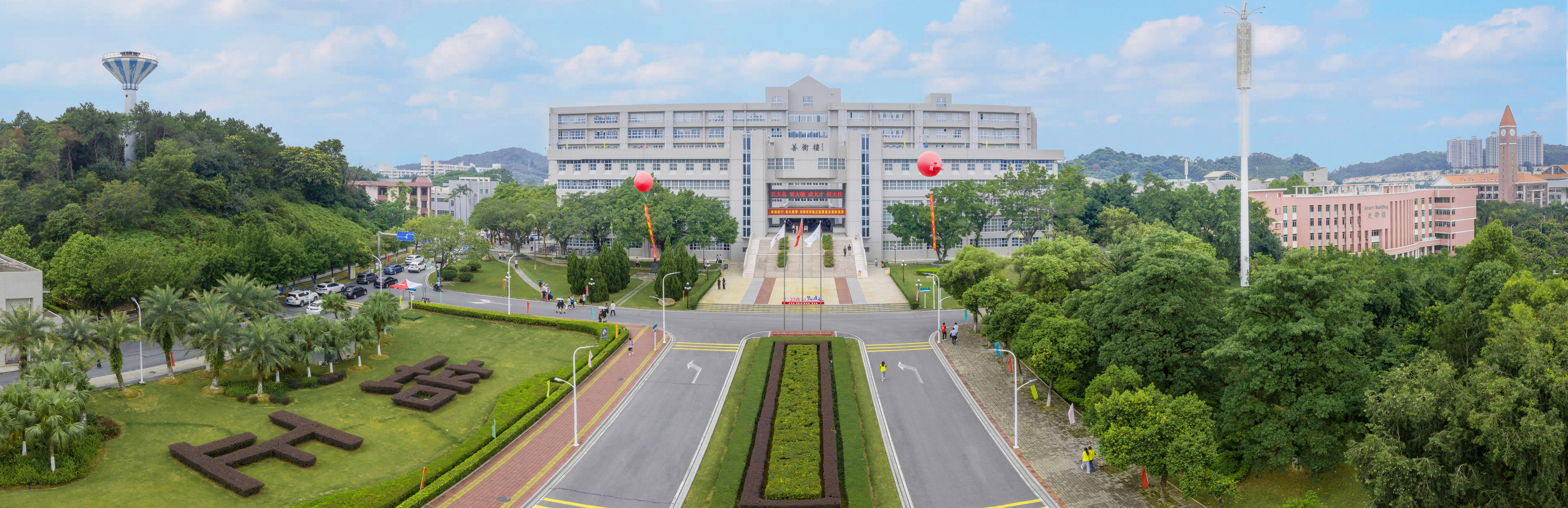
Expanding New Space for International Cooperation: Our University Participates in International Exchange Activities on School-Industry Integration in Malaysia
By Li Qinqin, International Exchange and Cooperation Office
From November 16th to 20th, Vice President Liang Jiaxi led a delegation from our university on a visit to Malaysia. The aim was to expand cooperation and exchanges between our university and Malaysia's education sector as well as industry circles, to build broader learning platforms for teachers and students, and to explore new pathways for cultivating international talents. The delegation included Li Yibo, Dean of the School of Data Science and Computer Science; Li Ximei, Vice Dean of the School of Foreign Studies; Li Xiuchen, Director of the Office of International Exchange and Cooperation; and Li Qinqin, staff member from the same office.
Connecting with ASEAN Industrial Resources to Explore New Opportunities for University-Enterprise Cooperation
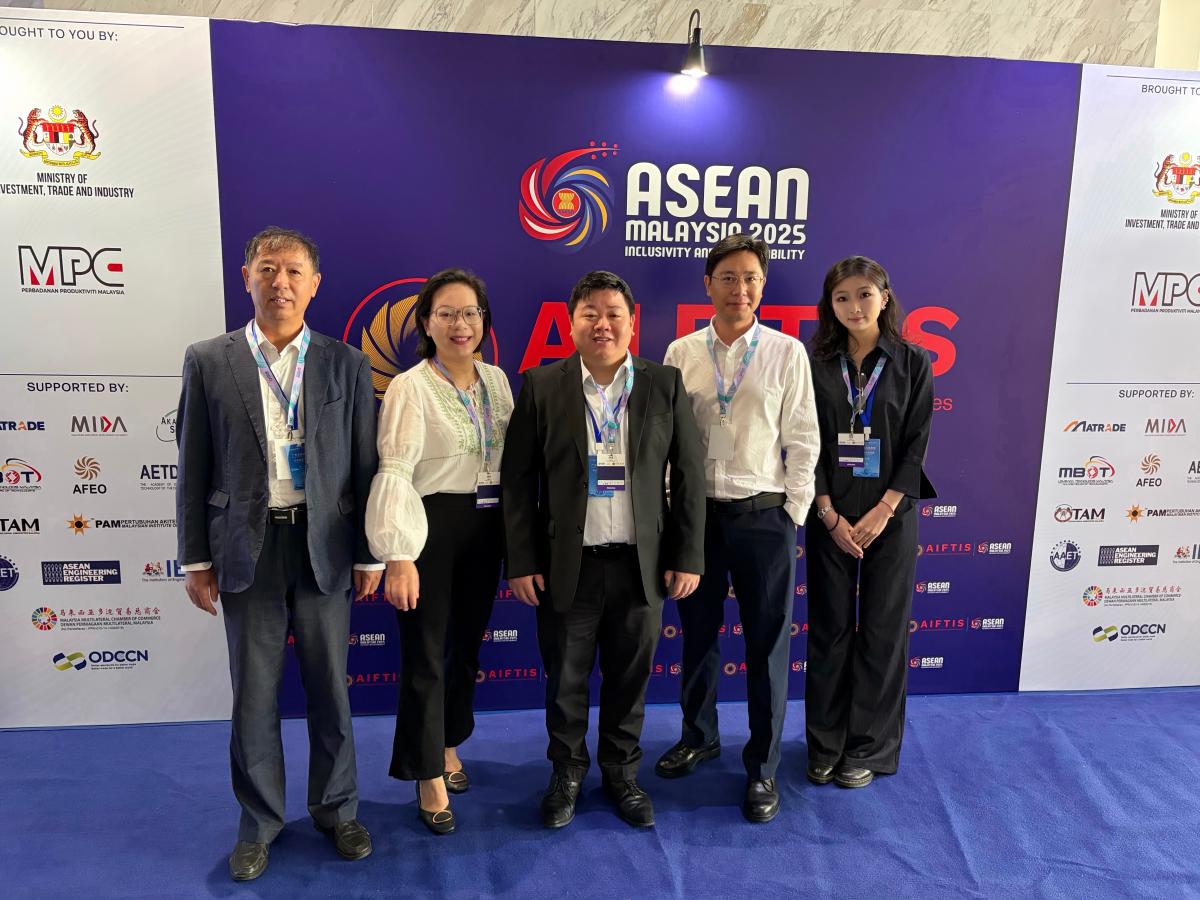
On the morning of November 17th, the delegation attended the opening ceremony of the inaugural ASEAN International Service Trade Expo, co-hosted by the Malaysian Investment Development Authority (MIDA), the Ministry of International Trade and Industry (MITI), and the Malaysian Services Providers Council (MSPC). By participating in the international exhibition and engaging in in-depth exchanges with local Chinese entrepreneurs and community leaders, the delegation gained a deep understanding of the current development status of Malaysian enterprises and actively sought opportunities for multifaceted university-enterprise cooperation.
Deepening Strategic Cooperation with Universities to Build New Platforms for Talent Cultivation
During the visit, the delegation intensively engaged with multiple Malaysian universities, promoting the upgrade of cooperation from "fragmented connections" to "systematic co-construction."
On the afternoon of November 17th, the delegation visited Universiti Malaya (UM), ranked 58th globally in the 2025 QS World University Rankings. As Malaysia's oldest and most prestigious public research university, UM holds significant advantages in fields such as artificial intelligence and computer science. Both sides conducted in-depth exchanges on educational philosophy, talent cultivation, and scientific research cooperation, and exchanged views on potential future collaboration directions.
On November 18th, the delegation visited Universiti Tunku Abdul Rahman (UTAR), a top comprehensive university in Malaysia. The two sides successfully held the China-Malaysia Education Innovation Seminar and simultaneously held the inauguration ceremonies for the "Greater Bay Area – ASEAN Emerging Industries College" and the "Guangdong – ASEAN Education Innovation and Development (Kuala Lumpur) Center." This marked a new stage where China-Malaysia education cooperation is advancing from fragmented connections to systematic co-construction. UTAR is renowned for its 97% high employment rate and solid foundation in China-Malaysia cooperation. The establishment of these two platforms further solidifies the foundation for bilateral collaboration.

That afternoon, the delegation visited INTI International University and Asia Pacific University of Technology & Innovation (APU) successively.
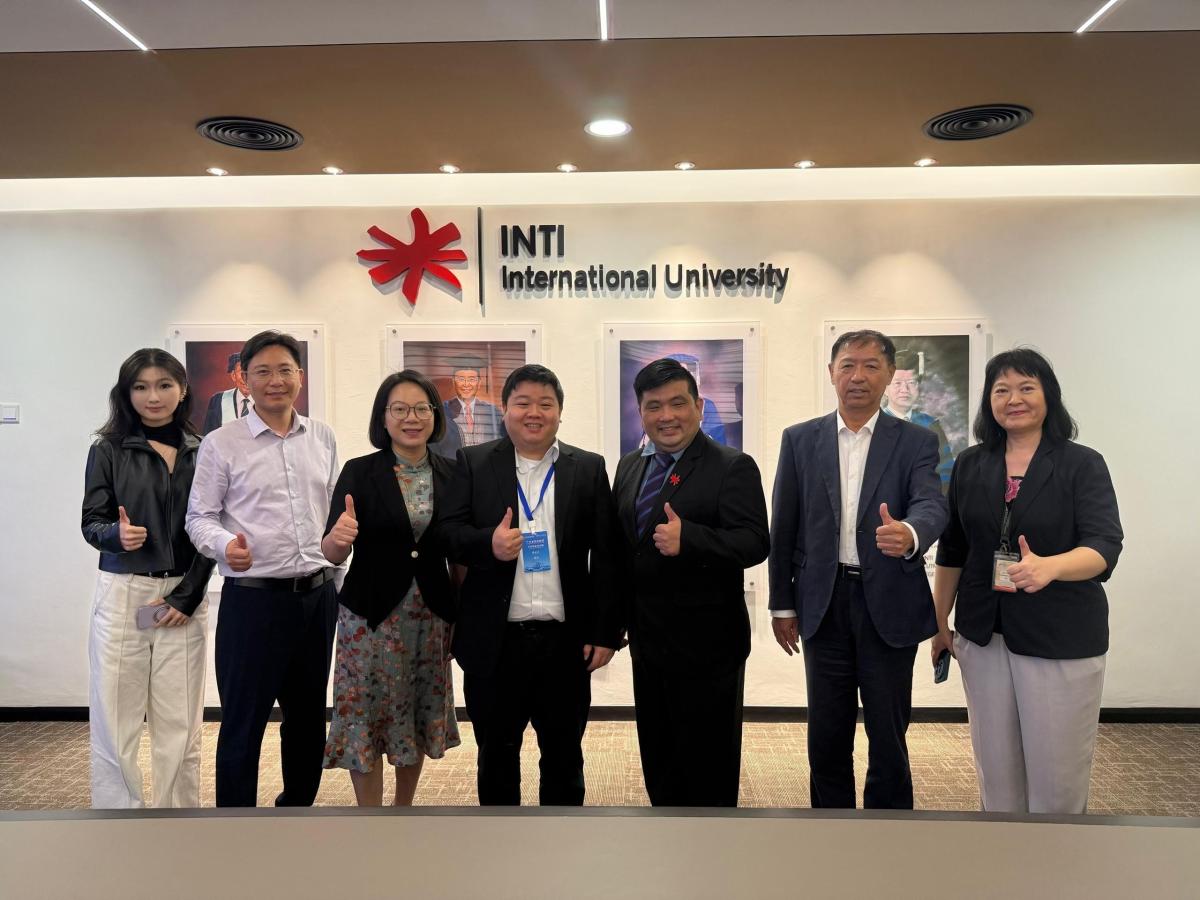
INTI International University is ranked 509th in the QS World University Rankings. Founded in 1986, it is a prestigious comprehensive private university in Malaysia, renowned for its business programs and American credit transfer courses. The university operates four campuses across Malaysia, with nearly 20,000 full-time students. International students constitute about 18% of the student body, hailing from nearly 100 countries and regions, giving the campus a strong international atmosphere.
During the discussion, both sides exchanged in-depth views on issues such as faculty and student exchanges, postgraduate (Master's/PhD) programs for teachers, and academic research cooperation, reaching multiple consensuses. Both parties look forward to subsequent discussions and signing a university-level cooperation agreement to lay a solid foundation for long-term collaboration. After the meeting, the delegation conducted a campus tour. The beautiful environment, advanced teaching facilities, and vibrant classroom atmosphere left a deep impression.
Asia Pacific University of Technology & Innovation (APU), founded in 1993, is a top private university with a core focus on technology and innovation. Its main campus is located in the Technology Park Malaysia, Kuala Lumpur, hosting about 13,000 international students from 130 countries, creating a strong international atmosphere. The university offers a wide range of programs from computing and engineering to business, all accredited by the Malaysian government and the Chinese Ministry of Education. It is ranked 621-630 globally in the 2024 QS World University Rankings. During the talks, both sides conducted fruitful discussions focusing on areas such as sharing educational resources, joint faculty development, student exchange and study abroad programs, and cultural exchanges, laying a good foundation for future cooperation.
Exchanging Basic Education Experience and Inheriting the Roots of Chinese Culture
On the morning of November 19th, the delegation visited Penang Chung Ling Private High School, a benchmark for Chinese education in Southeast Asia. Upholding the educational philosophy of "Revering Virtue, Valuing Propriety, and Inheriting Chinese Culture," this school, with a century-long history, is the first Chinese independent high school in Southeast Asia to fully adopt the Cambridge English curriculum. Accompanied by Principal Wu Weicheng, the delegation visited the school history exhibition hall, Chinese language teaching demonstration classrooms, library laboratories, and other facilities, gaining a detailed understanding of the school's practical experience in curriculum innovation, teaching faculty development, and the inheritance of Chinese culture.
This visit to Malaysia achieved a comprehensive breakthrough for our university in "industry对接 (connection), university cooperation, and basic education exchange," further expanding the international cooperation network and injecting strong momentum into the high-quality development of the university.