


April 29, 2026 Research & Teaching ReformStandards, Integration and Classroom Empowerment — Faculty of School of Management Attend International Business Accreditation Seminar
Standards Integration Classroom Empowerment — Faculty of the School of Management Participates in an International Business Certification Seminar
1. Preface
To further advance the ACBSP international business accreditation program and stay updated on the latest developments and practical experiences of the 2026 accreditation standards, a delegation comprising Zhang Chuanqin, Deputy Dean of Teaching at the School of Management; Guan Jinying, Accreditation Specialist for Human Resource Management; and Zhang Yixiao, Accreditation Specialist for Logistics Management, traveled to North China University of Technology on April 25 to attend the "International Business Accreditation and Quality Assurance System Seminar." Under the theme "Standards · Integration · Classroom Empowerment," the conference brought together over 200 business education experts and accreditation professionals from across the country.

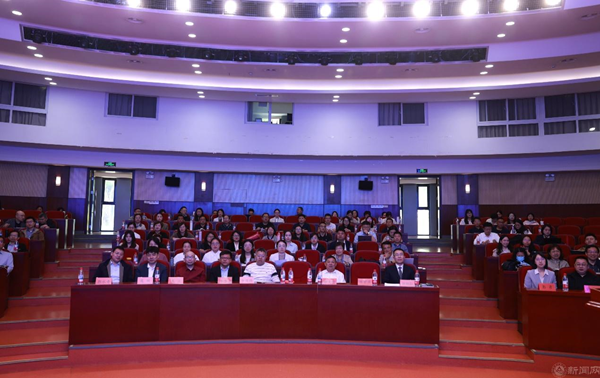
(Meeting venue)
At the opening of the conference, Chen Jiaqing, Standing Committee Member of the Party Committee and Vice President of North China University of Technology, emphasized in his address that international business accreditation essentially constitutes a scientific and systematic internal quality assurance framework. He urged universities to leverage this framework to advance the integration of engineering and management disciplines and deeply embed artificial intelligence into curricula. Professor Xu Dayou, member of the Ministry of Education's Teaching Guidance Committee for Business Administration, stressed that accreditation serves as the "touchstone" for quality assurance, asserting that business education must be "rooted, practical, and principled."
(1)Multiple Perspectives: Theoretical Frontiers and Institutional Practices in International Certification
During the experience-sharing session, numerous experts from institutions that have obtained or are applying for international accreditations shared insightful perspectives, elucidating the core values and implementation pathways of international business accreditation from various angles.
Professor Niu Huayong from Beijing Foreign Studies University delivered a lecture titled "International Accreditation and Comprehensive Capacity Building for Business Schools," systematically elucidating how international accreditation enhances a school's strategic positioning, governance capabilities, and global influence. He emphasized that accreditation efforts must be supported by institutional safeguards and resource investments, fostering a culture of quality through continuous improvement, thereby achieving comprehensive enhancements in both institutional governance and internationalized education practices.
Professor Long Jiang from Shanghai University of International Business and Economics argues that the AACSB international business accreditation serves as a strategic engine for the college's global development, systematically driving the restructuring of its governance framework and the internalization of a quality culture. He further emphasizes that accreditation efforts require broad consensus, institutional safeguards, and resource investment, with continuous improvements to deeply integrate international standards into local business education practices.
Professor Hua Guowei from Beijing Jiaotong University shared the university's valuable experience in obtaining simultaneous certifications from EQUIS, AACSB, and AMBA, focusing on the theme "Leveraging International Certification to Drive Comprehensive High-Quality Development of the School." He emphasized that the purpose of certification is to systematically enhance institutional governance, and it must be prioritized as a driving force for overall development.
Professor Pang Wen from Xi'an International Studies University has explored pathways for business program development in the era of artificial intelligence, proposing the core principle of "using AI to drive capability restructuring and ACBSP to enhance quality governance." AI not only transforms tools but also reshapes the competency framework, task architecture, and quality assurance mechanisms within business education.
Professor Guo Yongqi from Nanyang Institute of Technology demonstrated the "Five-in-One" closed-loop internal quality assurance system based on ACBSP certification. Centered on "student learning outcomes," this system encompasses five dimensions: conceptual objectives, standards and regulations, evaluation mechanisms, monitoring systems, and improvement frameworks, fostering a virtuous cycle of continuous improvement through a multi-dimensional stakeholder evaluation mechanism.
Professor Sun Qiang from North China University of Technology provided a detailed explanation of the key upgrades and practical form-filling techniques in the 2026 ACBSP certification standards, covering Standards 1 through 7. He emphasized that certification efforts should be guided by the institution's mission and vision, reinforcing a quality culture centered on "student focus, outcome orientation, and continuous improvement," while leveraging AI empowerment and curriculum-based ideological and political reform to significantly enhance the effectiveness of talent cultivation.
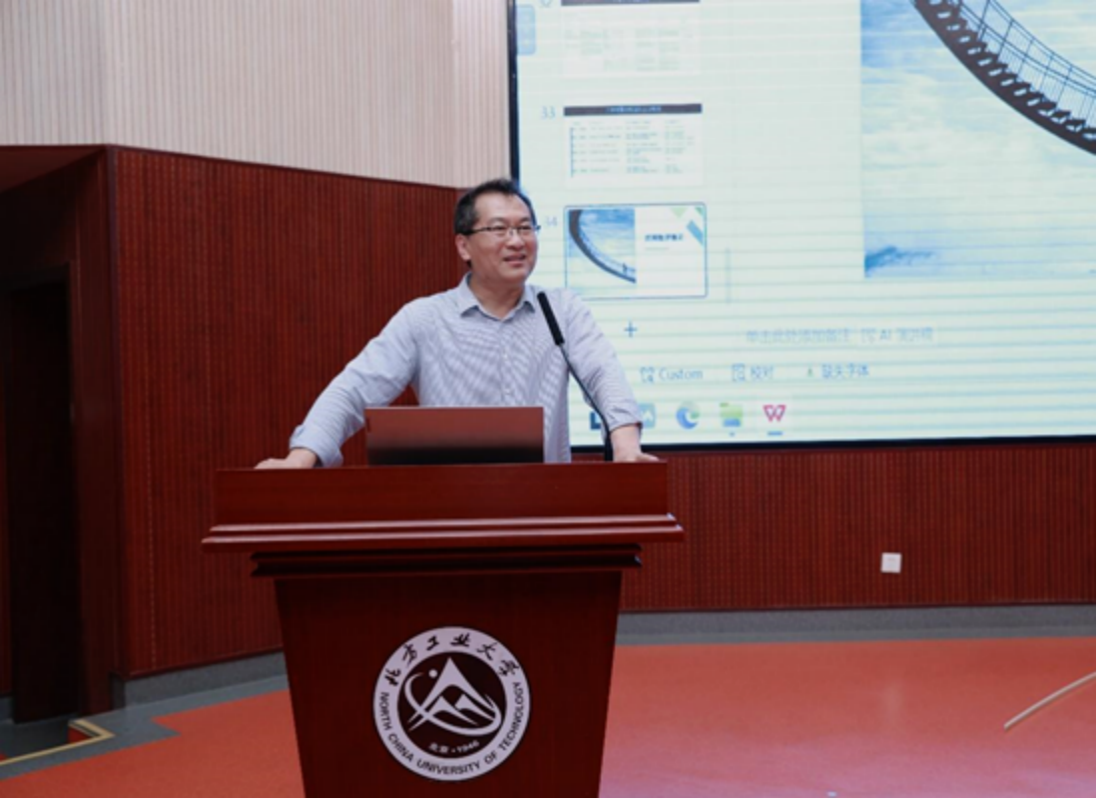
(Speech by Professor Sun Qiang from North China University of Technology)
(2)Deep Empowerment: Writing Self-Assessment Reports and Implementing External Evaluation Mechanisms
The afternoon session featured in-depth discussions on the implementation of accreditation standards and practical quality assurance measures. Professor Niu Huayong from Beijing Foreign Studies University provided an authoritative interpretation of the 2026 AACSB accreditation standards, enabling participating institutions to accurately grasp the evolving requirements of the accreditation process.
Professor Xu Bingqing delivered a comprehensive lecture titled "Building High-Quality International Certification Self-Assessment Reports," systematically elucidating the internal logical framework of self-assessment reports. She detailed how to interpret and implement the student-centered approach and OBE principles across the four modules defined by certification standards, while also explaining the Ministry of Education's initiative to leverage evaluation for improvement, reform, management enhancement, and overall strengthening.
Director Peng Yan delivered a keynote speech titled "External Evaluation and Comparison in the Construction of Quality Assurance Systems," emphasizing that certification standards require the use of comparative measures. The purpose is not merely to obtain numerical data but, more importantly, to identify gaps through comparison, thereby guiding improvement efforts.
(3)Summary and Outlook
At the conclusion of the conference, Professor Sun Qiang, Deputy Dean of the School of Economics and Management at North China University of Technology, delivered the conference summary. He noted that this seminar, spanning from standard interpretation to local implementation and from classroom empowerment to system restructuring, fully demonstrated China's active exploration and substantial achievements in business education within the international accreditation framework. International business accreditation serves not only as a quality control and assurance system but also as a vital tool for enhancing the global influence of academic disciplines. Institutions should further deepen, solidify, and refine their accreditation efforts to truly achieve "using evaluation to drive improvement and strengthen institutional capabilities."
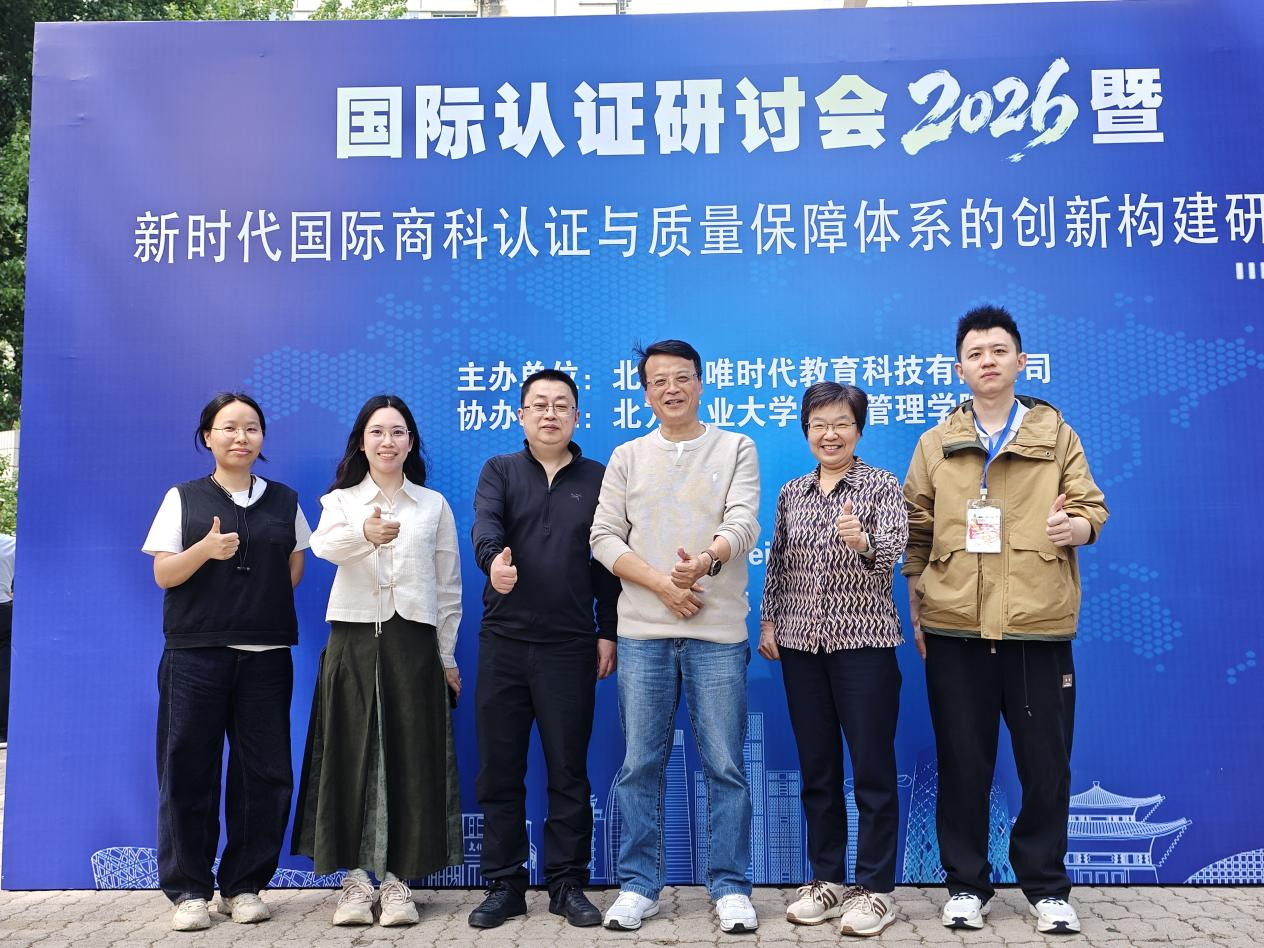
(Group photo)
2. Epilogue
This seminar provided cutting-edge theoretical guidance and practical insights for our institute's international business accreditation efforts. Moving forward, our institute will convene the ACBSP Accreditation Working Group and key faculty members from various disciplines to conduct a comprehensive self-assessment against the standards. Key priorities include re-evaluating the institution's mission and strategic planning, precisely defining course learning outcomes and designing corresponding evaluation rubrics, and establishing a closed-loop improvement mechanism for the learning assurance system.
Meanwhile, the college will accelerate its digital transformation efforts and explore the establishment of a teaching quality data platform to provide data-driven support for continuous improvement. This initiative aims to integrate "evaluation-driven development and enhancement" into daily teaching and management practices, thereby laying a solid foundation for cultivating high-caliber applied business professionals with global perspectives, digital literacy, and social responsibility.