


Auditing Program
Background and Vision
The Auditing Program is a core discipline within the field of Business Administration. Against the backdrop of the burgeoning digital economy and the development of the Guangdong-Hong Kong-Macao Greater Bay Area, the importance of corporate compliance, risk control and internal oversight is becoming increasingly prominent. Drawing on the substantial demand from small and medium-sized enterprises and the modern service sector in Guangdong, and addressing the pressing societal need for professionals in auditing, internal control and risk management, this Program is dedicated to cultivating versatile professionals proficient in auditing practice, data analysis and regulatory compliance.
Program Objectives
To cultivate graduates with a sound general education and a solid foundation in the theoretical principles of auditing, to possess strong practical application skills, AI information processing capabilities, logical thinking and innovation, particularly the ability to utilize AI tools and big data to analyse and resolve complex audit-related issues in the modern service industry, including those encountered in certified public accountant (CPA) auditing and internal auditing roles, to demonstrate a sound scientific spirit, humanistic values, physical and mental well-being, communication and expression skills, teamwork, systems thinking, critical thinking, entrepreneurial awareness, an international perspective, AI ethics and a commitment to lifelong learning, and to become high-calibre, versatile professionals capable of undertaking roles in certified public accountant auditing and internal auditing within the service sector, such as accounting firms. Upon graduation, students may pursue careers in the following fields:
✅ Accounting firms (CPA auditing)
✅ Enterprises and public institutions (internal audit)
✅ Government audit departments (government audit)
Program Highlights
Program Accolades: This Program is designated as a university-level first-class undergraduate Program (approved in 2025).
Industry and Skills-Oriented Approach: Focusing on the modern service sector and the leasing and business services industry, the Program emphasises the development of students’ practical auditing skills and data analysis capabilities, precisely addressing the auditing and financial and tax service needs of small and medium-sized enterprises.
Cutting-edge Curriculum and Practical Training Environment: The curriculum incorporates cutting-edge topics such as smart auditing and big data auditing, featuring specialised courses including ‘Big Data Analysis in Auditing’ and ‘Internal Control’. An auditing big data training laboratory has been established, equipped with advanced facilities such as a big data risk control platform, providing students with a practical training environment for digital auditing.
Simulation-Based Practical Training: Through simulation systems, students can immerse themselves in realistic scenarios of an auditor’s work—simulating the entire process from accepting engagements, collecting audit evidence, implementing audit procedures, to preparing audit reports. This allows them to familiarise themselves with the workflow of their future roles in advance and hone their practical skills.

Fig. 1 Big Data Auditing Training Laboratory
Course Highlights
OBE (Outcome-Based Education): Centred on the achievement of students’ final competencies, the curriculum and assessment standards are designed in a backward-planning approach to ensure graduates possess clearly measurable professional competencies in practical auditing, data analysis, risk identification and compliance management.
Dual-Track Learning System: Audit studies are divided into two major aspects: theory and practice. On the one hand, students systematically study theoretical knowledge such as ‘Principles of Auditing’, ‘Government Auditing’, ‘Certified Public Accountant Auditing’, ‘Internal Auditing’ and ‘Performance Auditing’ to gain a deep theoretical understanding of auditing; on the other hand, they undertake practical operations using simulation systems in the training laboratory, thereby achieving the integration of knowledge and practice.

Fig. 2 Theoretical Knowledge Acquisition
Digitalisation/AI-Empowered Courses: The curriculum incorporates cutting-edge content such as smart auditing and big data auditing. Specialised courses including ‘Big Data Analysis in Auditing’, ‘Internal Control’ and ‘Big Data Auditing’ are offered to cultivate students’ ability to utilise big data technologies for audit analysis, risk identification and control.
Industry-Academia Integration Courses: Tailored to the modern service sector and the leasing and business services industry, the curriculum incorporates cutting-edge topics such as smart auditing and big data auditing. Courses such as ‘Comprehensive Auditing Simulation and Practical Training’ and ‘Internal Control’ have been introduced to ensure a seamless transition from the classroom to auditing roles.
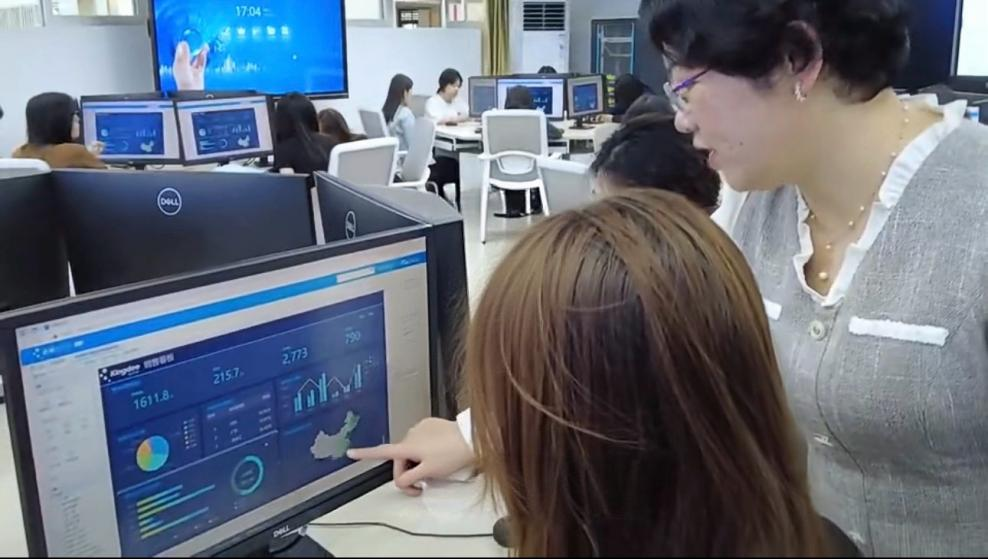
Fig. 3 Intelligent Auditing Teaching

Fig. 4 Audit Simulation Training
Blended Learning: All courses utilise the ChaoXing Learning Pass platform to provide comprehensive access to learning resources, with an online usage rate exceeding 95%. This supports a full-cycle learning process encompassing pre-class preparation, in-class interaction and post-class consolidation.
Core Courses: Principles of Auditing, Internal Auditing, Auditing Practice, Internal Control, Tax Law, Economic Law, Financial Accounting, Big Data Auditing, Corporate Strategy and Risk Management, Comprehensive Auditing Simulation Training, etc.
Degree Awarded: Bachelor of Management
Career Prospects
Accounting Firms (CPA Audit): Graduates may work in renowned international and domestic accounting firms (such as the Big Four and Big Eight) in service areas including audit assurance, tax audit, financial due diligence and internal control consultancy.
Enterprises and Public Institutions (Internal Audit): Graduates may work in roles such as internal audit, internal control, risk management and compliance review within various enterprises.
Government Audit Departments (Government Audit): Candidates may enter audit supervision and compliance inspection roles within government departments such as audit bureaus, finance and taxation departments by passing the civil service examination.
Risk Control in Financial Institutions: Positions in risk management, internal audit and compliance management within banks, securities firms and insurance companies.
Competitive Advantage: Those with big data auditing capabilities possess a significant competitive edge in the fields of digital auditing and continuous monitoring.
Employment Rate: Over the past three years, the overall employment rate for graduates has consistently exceeded 94%.