

Economics Program
Background & Vision
The deep integration of digital and real economies is reshaping modern industrial development. As the core engine of the Guangdong-Hong Kong-Macao Greater Bay Area, Guangdong is advancing industrial transformation driven by data analytics and integrated online-offline operations. Industrial research and implementation have evolved from traditional empirical judgment to data-based evaluation, full-cycle delivery, scenario-driven innovation and cross-industry collaboration. Boasting a digital economy scale exceeding 8 trillion yuan in 2025 and leading the country for nine consecutive years, Guangdong has witnessed robust growth in artificial intelligence, advanced manufacturing and digital services. The region has a rising demand for interdisciplinary talents with solid economic expertise to analyze market trends, interpret industrial rules and advance commercial applications. This underscores the essential role of economics in facilitating industrial upgrading and high-quality economic development in Guangdong.
Objectives
We aim to cultivate high-caliber interdisciplinary applied talents with patriotism, moral integrity and a strong sense of social responsibility, who achieve all-round development in morality, intellect, physical well-being, aesthetics and labor. With solid general knowledge and economic expertise, they can apply AI and big data to tackle complex issues in modern services and economic fields, conduct industrial research and product design, and assist enterprises in identifying industry trends, exploring market opportunities and launching high-value products.
Program Highlights and Career Prospects
Curriculum
Core Professional Courses: Political Economy, Microeconomics (Intermediate included), Macroeconomics (Intermediate included), Econometrics, Accounting, Statistics, AI in Finance, Management, Machine Learning & Economic Forecasting, Intelligent Marketing, etc.
Practical Courses: Virtual Simulation Experiments in Economic Decision-Making, AI Agent Development Training, Econometric Analysis & Stata Application Training, Economic Big Data Analysis Training, etc.
Career Prospects
Jobs: Graduates can take up roles in financial institutions, modern service industries, industrial research departments and product management posts. They may work as economic analysts, data analysts, market researchers and product specialists, engaging in market trend assessment, data processing, product operation and business planning.
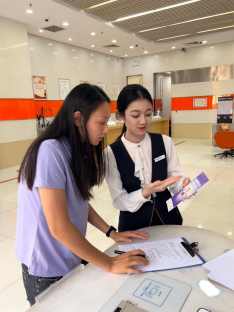
Fig. 1 Student Work Scenario
Entrepreneurship: With solid economic theories and digital skills, students are capable of identifying market gaps, evaluating business viability and formulating operational strategies. They can launch startups in digital services, commercial consulting, e-commerce and related fields.
Further Study: A large number of graduates choose to pursue postgraduate degrees at home and abroad. Main research directions include theoretical economics, applied economics, econometrics, digital economy and financial technology, broadening academic and career development paths.
Civil Service: This major equips learners with systematic economic thinking and analytical capabilities. They are eligible for civil service positions in finance, taxation, market supervision, development and reform, and other government departments, undertaking policy research, economic governance and public administration work.
Faculty and Academic Achievements
Faculty:The Economics program is staffed by a team of 12 academic staff, all educated at prestigious universities at home and abroad with solid academic backgrounds in economics and related disciplines. Every faculty member holds a master’s degree or higher. Twenty-five percent of the team are holders of doctoral degrees or senior academic titles, demonstrating strong research expertise. Meanwhile, 41.6% have extensive professional experience in relevant industries, enabling them to integrate practical insights into teaching effectively.
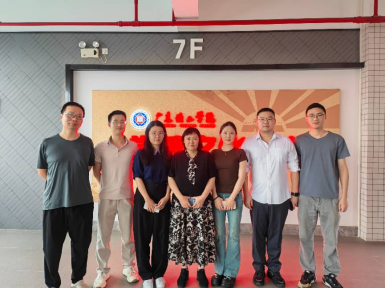
Fig. 2 Group photo of the teaching staff
Academic Achievements: Over the past five years, faculty members have secured research funding for one municipal humanities and social science project in Guangzhou, one Collaborative Education Project sponsored by the Ministry of Education, one provincial commissioned research project, and five institutional research projects.The team has also led one provincial teaching innovation project, three institutional teaching reform projects and one practical teaching platform development project. Collectively, faculty have received ten institutional awards and authored thirteen peer-reviewed academic papers.
Students’ Competition Achievements
In recent years, our students have attained remarkable achievements in a host of prestigious national and provincial competitions. These include the Comprehensive Economic Game Experiment Contest (National Collegiate Virtual Simulation Competition for Economic Decision-Making), the Zhengda Cup National Collegiate Market Survey and Analysis Competition, the Eastmoney Cup National Collegiate Finance Challenge, the National Finals of the National Collegiate Comprehensive Business Competency Competition, and the Guangdong Provincial Collegiate Mathematics Competition.

Fig. 3 Students in the Finals of Comprehensive Economic Game Experiment Contest