


Financial Engineering Program
Background & Vision
With the deep integration of the digital economy and capital markets, modern finance is increasingly characterized by quantitative analysis, intelligent investment, and refined risk management. The widespread application of big data, artificial intelligence, and quantitative modeling technologies has accelerated the digital transformation of financial institutions, enabling more scientific pricing, risk control, and investment decision-making.
As a core financial hub of the Guangdong-Hong Kong-Macao Greater Bay Area, Guangdong Province has an active capital market and a strong demand for interdisciplinary professionals with expertise in finance, quantitative analysis, and financial technology. Financial institutions, securities firms, asset management companies, and investment enterprises increasingly seek talents who can apply quantitative tools and engineering-based thinking to financial product design, investment analysis, and risk management while supporting the real economy.
In response to these industry trends, the Financial Engineering program at our university is closely aligned with the development needs of the Greater Bay Area. Leveraging regional financial resources and industry partnerships, the program continuously enhances its curriculum and practical training system. It aims to cultivate application-oriented professionals with solid financial knowledge, quantitative analytical skills, technological competence, and innovative capabilities to meet the evolving demands of the digital finance industry.
Objectives
The Financial Engineering program serves Guangdong and the Guangdong-Hong Kong-Macao Greater Bay Area by addressing the needs of modern financial industry development. It aims to cultivate high-quality, application-oriented professionals with strong moral character, social responsibility, and interdisciplinary competencies. Students acquire solid knowledge of finance and financial engineering, and develop the ability to apply AI and big data tools to analyze financial markets, solve complex financial problems, and formulate investment strategies. Graduates are prepared for careers in financial data analysis and financial technology applications, with the potential to become financial analysts or fintech project managers.
Two Specialized Tracks
1. Financial Technology
This track focuses on the integration of finance and information technology, with an emphasis on financial digitalization and quantitative trading.
Core Courses: Introduction to Financial Technology, Python for Financial Data Analysis, Quantitative Investment Theory and Practice.
Students will acquire a solid foundation in finance, Python-based data processing techniques, and quantitative modeling methods. They will develop skills in financial data mining, quantitative strategy development, and intelligent risk management.
Career Pathways: Graduates may pursue positions in securities firms, banks, fund management companies, and fintech enterprises as quantitative analysts, financial data specialists, risk modeling analysts, or intelligent investment research professionals.
2. Securities Investment
This track focuses on investment and financing activities in capital markets, emphasizing securities practice and investment banking operations.
Core Courses: Securities Investment, Securities Investment Analysis, Investment Banking
Students will gain a thorough understanding of capital market operations and develop expertise in both fundamental and technical analysis. They will be equipped with practical skills in securities analysis, wealth management, asset allocation, and basic investment banking operations.
Career Pathways: Graduates may work in securities companies, futures firms, wealth management institutions, and investment banking divisions as securities brokers, investment advisors, industry researchers, or investment banking assistants.
Faculty Excellence
The Financial Engineering program currently has 13 full-time faculty members, forming a young and dynamic teaching team with strong growth potential and distinctive interdisciplinary strengths. Among them, one faculty member holds a senior academic title, three are dual-qualified teachers with both academic and industry experience, and two have overseas study experience, bringing an international perspective to teaching and learning.The faculty team possesses expertise across multiple disciplines, including finance, investment, business administration, and artificial intelligence. Closely aligned with industry developments and evolving workforce demands, the program emphasizes a practice-oriented approach to teaching and talent development, integrating theoretical knowledge with real-world applications.
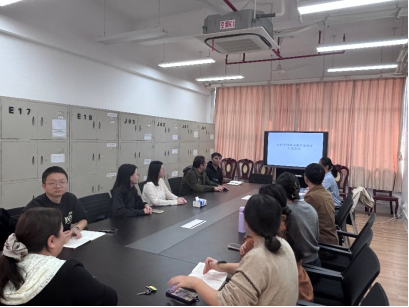
Fig. 1: Faculty Seminar of the Program
Industry Integration & Practical Training
The Financial Engineering program actively promotes industry–university collaboration and practice-oriented education through partnerships with a number of enterprises to establish off-campus training and internship bases. Students have opportunities to undertake internships in partner companies, participate in real-world business data projects, and receive hands-on guidance from experienced industry mentors. Jointly developed training courses with industry partners help bridge the gap between classroom learning and workplace practice.

Fig. 2: Students Visiting Partner Enterprises for Study and Learning

Fig. 3: Visits to Partner Enterprises
The program also encourages students to obtain recognized professional certifications, such as the Securities Qualification Certificate and the Fund Practitioner Qualification Certificate. These credentials provide industry-recognized validation of students’ practical competencies and enhance their professional qualifications and career readiness.
Competition & Innovation
Guided by the philosophy of "learning through competition", the Financial Engineering program actively encourages students to participate in various academic and professional competitions, including the Eastmoney Financial Challenge, the ETF Elite Challenge, and the “Challenge Cup” Innovation and Entrepreneurship Competition. Through these competitions, students apply their professional knowledge to solve real-world financial and business problems, continuously enhancing their investment analysis skills, teamwork capabilities, and innovative thinking. These experiences also strengthen their ability to conduct comprehensive analysis and decision-making in complex investment projects.
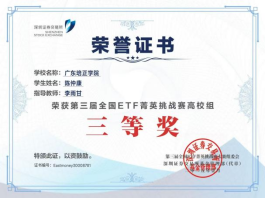

Fig. 4: Students’ Competition Award Certificates
Further Education
The Financial Engineering program provides a solid academic foundation for students pursuing postgraduate studies and supports their continued academic development. The postgraduate entrance examination admission rate for both the Class of 2025 and the Class of 2026 was approximately 5%. Graduates who pursue further education mainly specialize in fields such as Finance, Investment, and related disciplines. The program’s comprehensive combination of theoretical instruction and practical training significantly enhances students’ competitiveness for postgraduate studies and future academic advancement.
Program Highlights
• Interdisciplinary integration of Finance + Management + Artificial Intelligence
• Dual-track system aligning with Financial Technology and Securities Investment Career Paths
• Strong emphasis on practical skills, certifications, and real-world projects
• Deep collaboration with industry and enterprise partners
• Proven student success in competitions and employment outcomes