

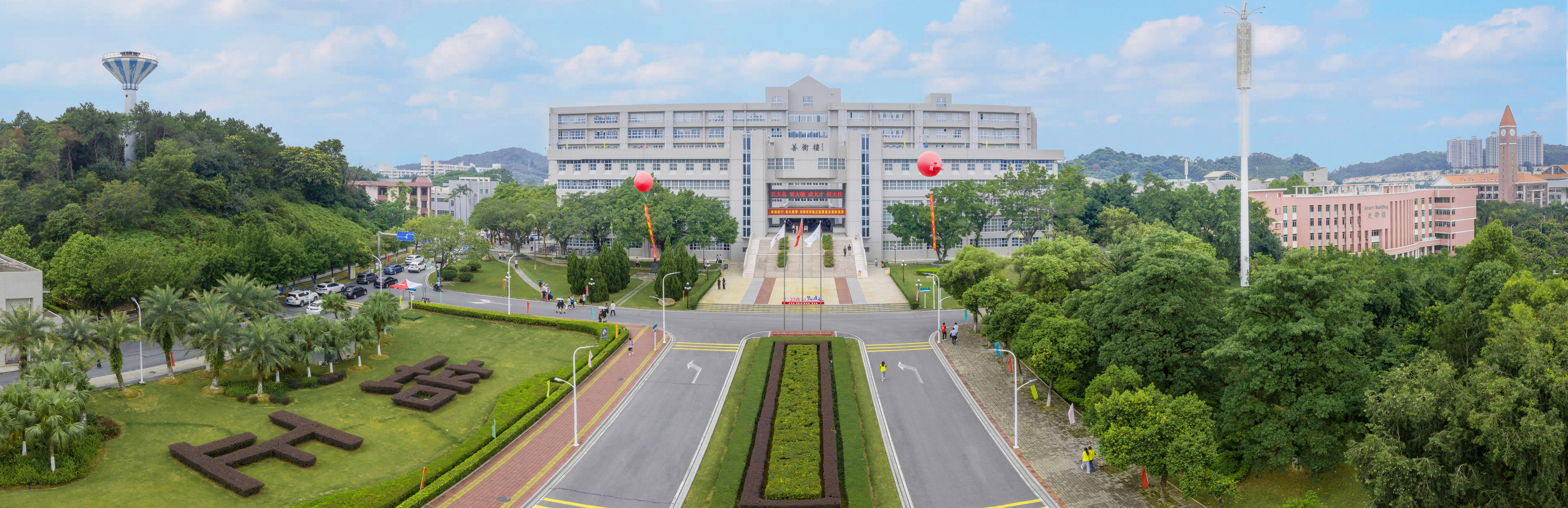
School of Economics
Established in 1998, the School of Economics has consistently adhered to the educational philosophy of "Cultivating Talents through Student-Oriented Education, Quality-Driven Institutional Development, and Faculty Excellence." Upholding the foundational mission of "Fostering Virtue and Cultivating Talents," the School is strategically positioned in Guangdong, with a national outlook, and actively aligns with the national "Belt and Road" Initiative and the development strategy of the Guangdong-Hong Kong-Macao Greater Bay Area. Committed to the goal of cultivating applied, high-quality professionals who provide specialized human resources and intellectual support for regional economic and social development, the School has achieved notable progress and developed distinct strengths in discipline construction, program development, talent cultivation, faculty team building, and social service.
The School currently offers eight undergraduate programs: International Economics and Trade, Economics, Investment, Financial Engineering, Economic Statistics, Applied Statistics, Big Data Management and Application, and Digital Economy. It enrolls 2,418 full-time students and employs 122 faculty members, including 91 full-time faculty and 31 adjunct professors. The faculty composition by title is as follows: 11 professors, 25 associate professors, and 23 lecturers. In terms of educational background, the faculty includes 16 Ph.D. holders and 99 master's degree holders. In recent years, 10 faculty members have been sent as visiting scholars to renowned universities both domestically and internationally, forming a well-structured and competent teaching team that integrates full-time, part-time, and external experts.
In recent years, the School has undertaken over 20 research projects at the national, provincial, and ministerial levels, as well as industry-commissioned projects. It has published more than 10 textbooks and academic monographs and over 100 research papers. The School actively engages in international cooperation, maintaining student and faculty exchange programs with institutions such as Midwestern State University (USA), the University of Northampton (UK), NHL Stenden University of Applied Sciences (Netherlands), and Brock University (Canada). The School continuously advances teaching reform and pedagogical innovation, vigorously promoting the development of first-class programs and first-class courses. It fully implements the talent cultivation philosophy centered on student outcomes, continuous improvement, and outcome-based education, aiming to enhance the alignment of talent development with the demands of economic and social progress and student career aspirations. The blended online-offline course *International Economics*, led by Lecturer Gui Jiayue, was recognized as a 2021 Provincial First-Class Undergraduate Course by the Guangdong Provincial Department of Education. Additionally, the quality course *International Economics*, developed by Associate Professor Cao Yinhua's team, was included in the "Exemplary Teaching Package" collection by Chaoxing Group in April 2022.
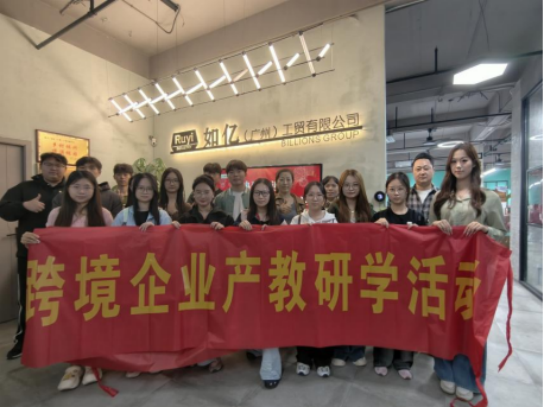
The School has established a comprehensive practical teaching system. Guided by the principles of social collaboration as a precursor, dual-direction cultivation as a driver, practice-internship-competition as a platform, and talent articulation as a goal, the School has progressively built a practical teaching framework integrating "practical training, internships, academic competitions, and innovation and entrepreneurship." It actively promotes practical teaching reform and accelerates the construction of experimental and training facilities. To date, the School has completed eight specialized laboratories and training rooms, including the Economic Big Data Automation Robotics Lab, the Finance Lab, the Securities Simulation Trading Lab, the Big Data Analysis and Application Lab, the International Economics and Trade Comprehensive Training Room, the Cross-border E-commerce Industry-Education Integration Training Room, the Statistical Survey and Analysis Lab, and the Digital Economy Lab.

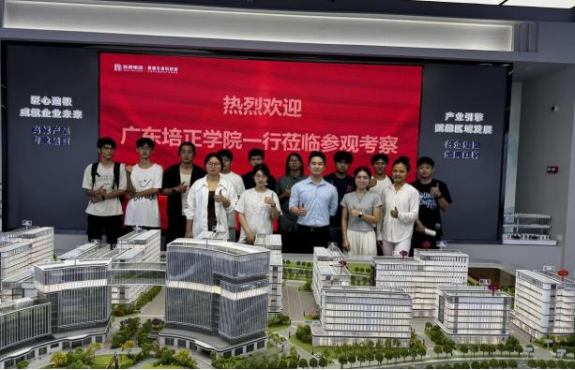
The School remains steadfast in strengthening the central role of undergraduate education, continuously enhancing the academic standards and quality of its programs. It deepens the development of bilingual and English-medium courses, steadily improves the level of international cooperative education, and expands collaborative program offerings. The quality of talent cultivation has been steadily improving, with students actively participating in national and provincial academic competitions and various volunteer and practical activities. The School consistently upholds the overarching goal of student growth, success, and career achievement. The one-time employment rate for graduates has consistently remained above 90%, with career placements spanning large and medium-sized enterprises, multinational corporations, financial and insurance institutions, and civil service positions. The number of students pursuing postgraduate studies and overseas education has also been increasing year by year.