


Big Data Management and Application Program
Background & Vision
In the digital era, data has become a critical production factor and a core driver of economic growth. With the rapid advancement of artificial intelligence, cloud computing, and digital platforms, industries across the globe are undergoing profound transformation toward data-driven decision-making and intelligent operations.
Guangdong Province, as a leading hub of China’s digital economy and a core engine of the Guangdong-Hong Kong-Macao Greater Bay Area, demonstrates strong demand for interdisciplinary professionals who can integrate data technology with business intelligence. Enterprises increasingly require talents who not only understand data technologies, but also possess solid foundations in economics and management to translate data insights into strategic value.
The Big Data Management and Application program at Guangdong Peizheng College was established to meet this demand. In 2025, the program was approved as a University-Level First-Class Undergraduate Major, reflecting its strong development momentum and high-quality construction standards. Rooted in regional economic needs and oriented toward the future of intelligent industries, the program is committed to cultivating application-oriented, innovative, and interdisciplinary professionals.
Objectives
Serving the development of the Greater Bay Area and the digital economy, the program aims to cultivate interdisciplinary, application-oriented talents with solid foundations in management, economics, and statistics, as well as strong competencies in data processing, analysis, mining, and visualization. Students are trained to effectively apply big data and AI technologies in real business contexts, integrating knowledge across "Data + Management + Technology" to support data-driven decision-making and intelligent operations. Graduates are expected to become versatile professionals capable of contributing to digital transformation in enterprises, government agencies, and emerging industries.
Two Specialized Tracks
1. Big Data Engineering and Intelligent Analytics
This track focuses on the technical and analytical dimensions of big data, emphasizing advanced modeling, machine learning, and intelligent decision-making.
Core Courses: Predictive Modeling and Intelligent Analytics, Machine Learning and Intelligent Decision-Making, Deep Learning Methods and Applications.
Students develop competencies in Data modeling and algorithm design, Machine learning applications, AI-driven decision systems, Advanced data analysis and forecasting.
Career Pathways: Graduates are well-prepared for roles such as Data Analyst, Machine Learning Engineer, Business Intelligence (BI) Engineer, Data Scientist (entry-level), Intelligent Decision Support Specialist.
2. Digital Business Operations and Intelligent Applications
This track emphasizes the integration of big data with business operations, focusing on digital transformation, intelligent management, and AI-driven applications.
Core Courses: Business Analytics Methods and Tools, Digital Operations and Intelligent Decision-Making, Management Large Models and AIGC Applications
Students gain expertise in Business data analysis and interpretation, Digital platform operations and optimization, AI applications in management scenarios, AIGC (AI-Generated Content) and large-model applications in business.
Career Pathways: Graduates can pursue roles such as Business Analyst, Digital Operations Specialist, Data-Driven Marketing Analyst, Product Data Manager, AI Application Specialist in Business Contexts.
Faculty Excellence
The Big Data Management and Application program is supported by a young, dynamic, and fast-growing faculty team of 13 members, characterized by strong interdisciplinary integration and development potential. Among them, two hold senior academic titles, two are dual-qualified with both academic and industry experience, and three have overseas study backgrounds, contributing to an internationalized perspective in teaching. The team is committed to integrating data science, management, and artificial intelligence, delivering practice-oriented education closely aligned with industry needs and technological advancements.
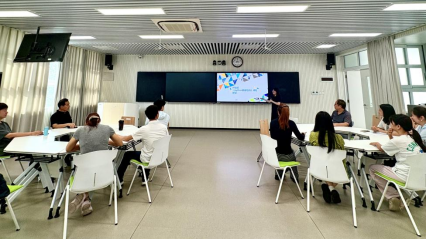
Fig. 1: Faculty Seminar of the Program
Industry Integration & Practical Training
The program places strong emphasis on industry collaboration and experiential learning by maintaining close partnerships with a range of enterprises and jointly developing off-campus training bases. Through these collaborations, students engage in enterprise internships, participate in real-world data projects, and receive guidance from industry professionals, while also benefiting from jointly designed training programs that bridge academic learning with practical application.
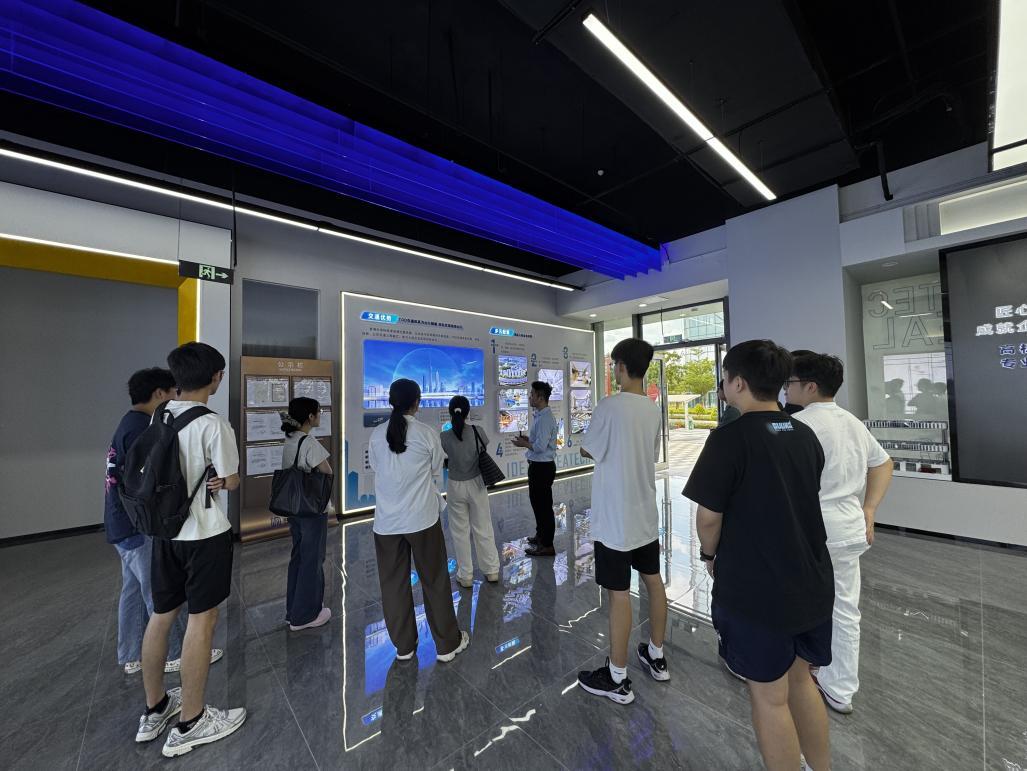
Fig. 2: Students Visiting Partner Enterprises for Study and Learning

Fig. 3: Visits to Partner Enterprises
In addition, the program actively encourages students to pursue industry-recognized certifications such as the Certified Data Analyst (CDA). To date, 57 students have obtained CDA Level I and II certificates, reflecting their solid practical skills and strong readiness for data-driven professional roles.
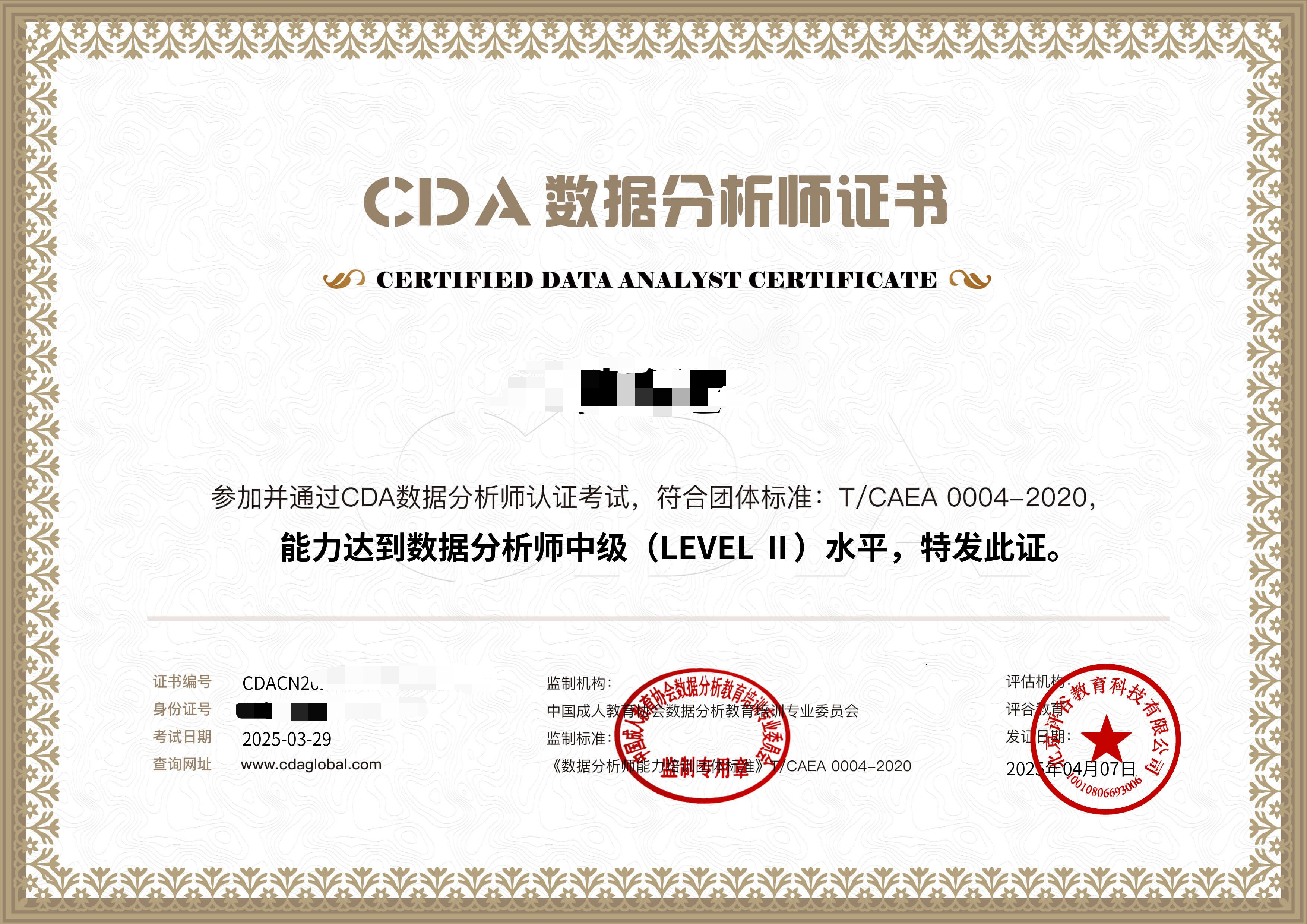
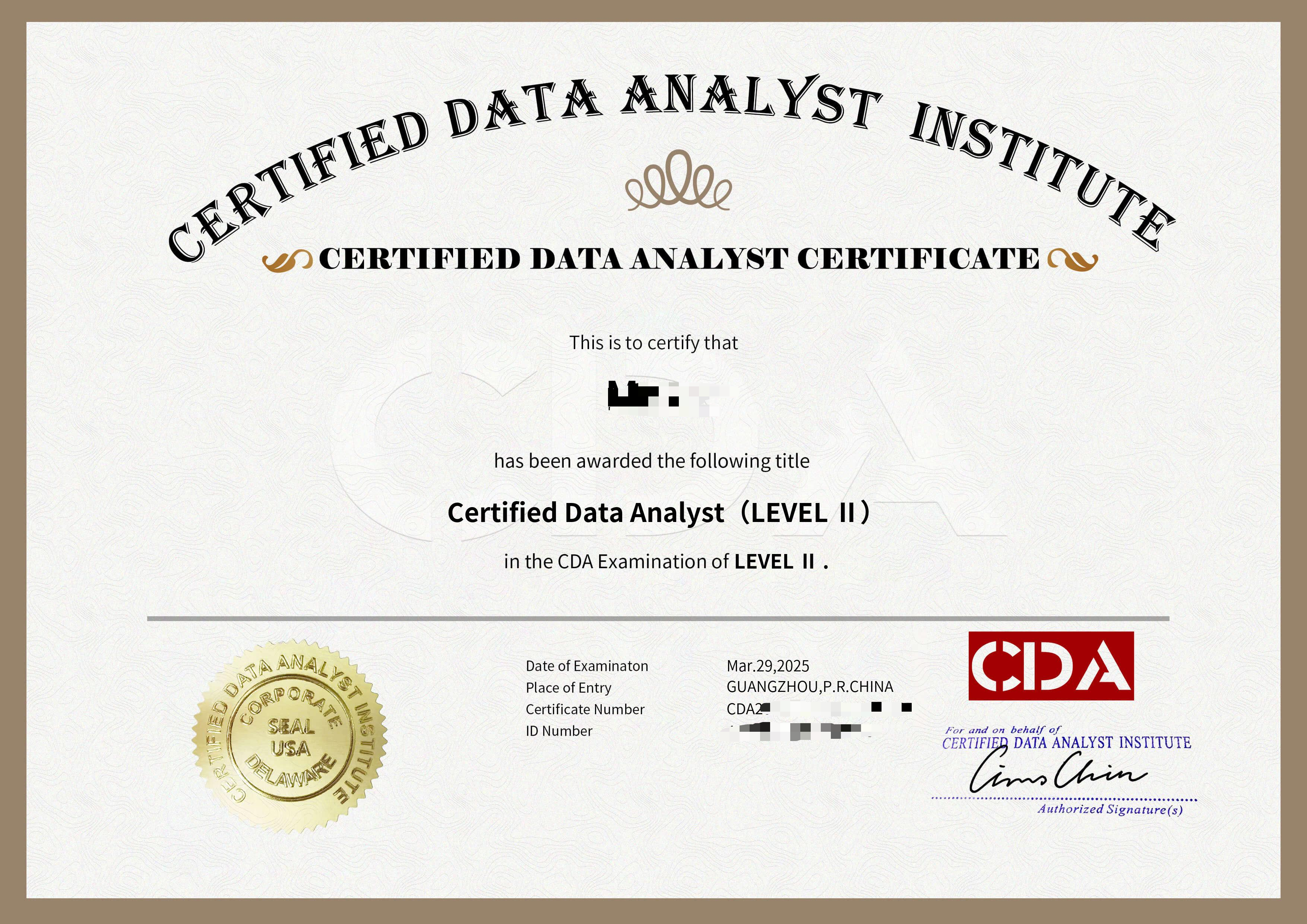
Fig. 4: CDA Level II certifications
Competition & Innovation
The program actively promotes a "learning through competition" approach to strengthen students’ practical skills and innovative capabilities. Students are encouraged to participate in a wide range of national and provincial competitions, such as Big Data Analysis Competitions, the "Teddy Cup" Data Mining Challenge, and the "Challenge Cup" Innovation and Entrepreneurship Competition, where they apply their knowledge to real-world problem-solving scenarios.
Through sustained engagement in these competitions, students continuously enhance their data analysis proficiency, teamwork, and creative thinking, demonstrating strong capabilities in tackling complex, data-driven challenges.
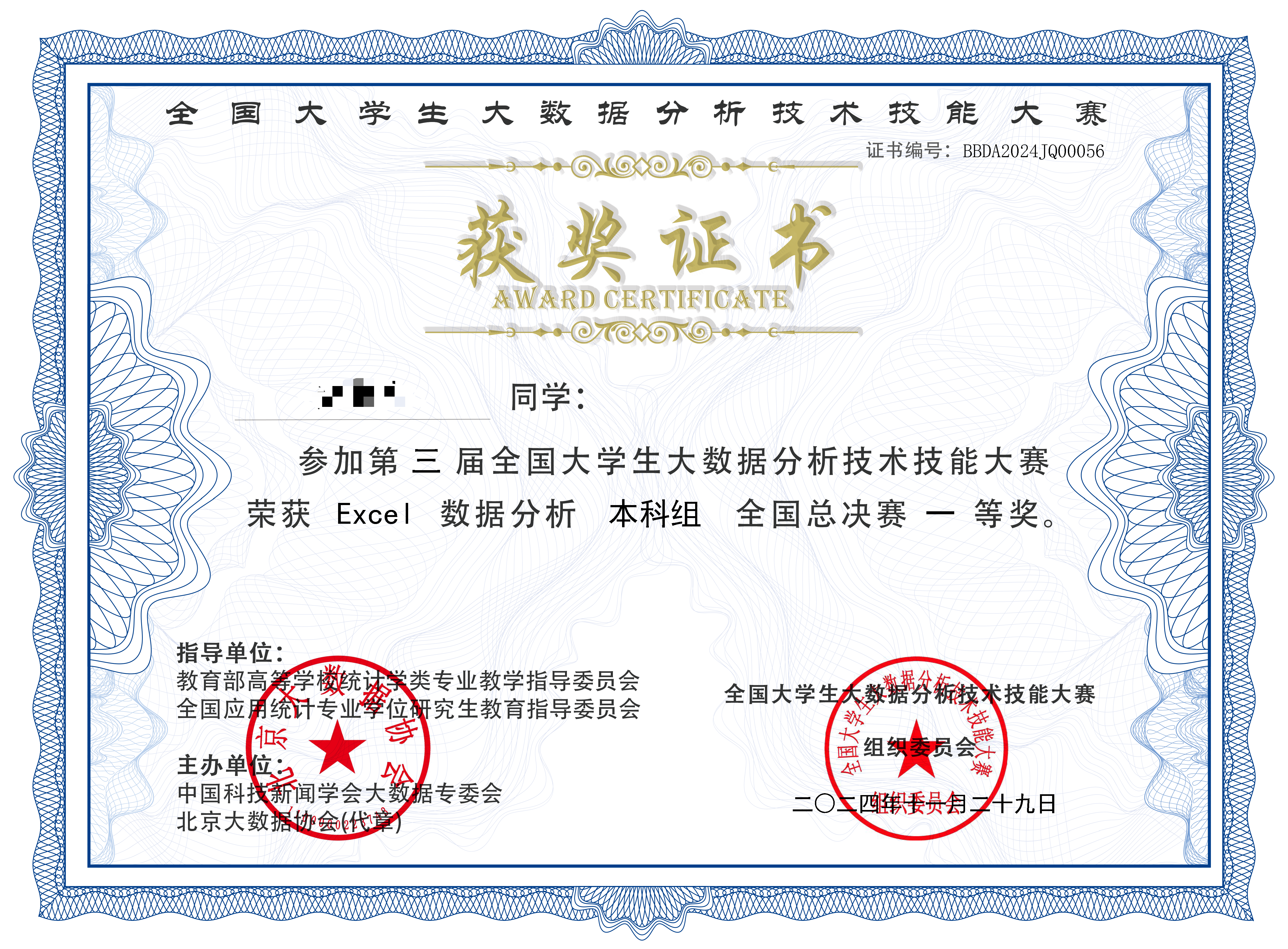
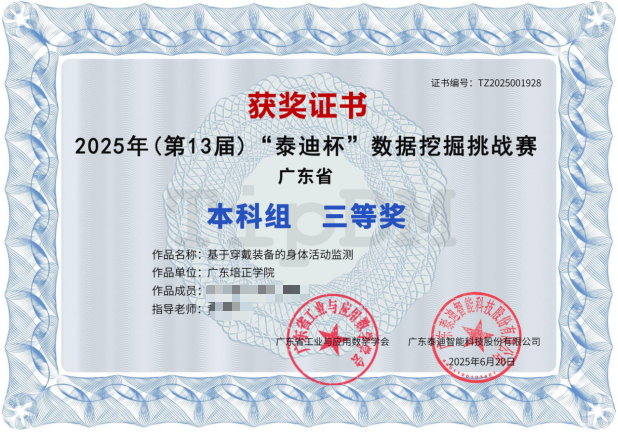
Fig. 5: Students’ Competition Award Certificates
Further Education
The program actively supports students in pursuing advanced studies by building strong foundations in quantitative methods, data analysis, and project-based learning. With two graduating cohorts to date, the program has demonstrated steady progress in postgraduate outcomes: 5.13% of the Class of 2025 and 6.78% of the Class of 2026 have been admitted to graduate programs. Graduates typically continue their studies in fields such as Management Science and Engineering, Data Science, and Applied Statistics, benefiting from solid academic preparation and practical experience that enhance their competitiveness for postgraduate admission.
Program Highlights
• Interdisciplinary integration of Data + Management + Artificial Intelligence
• Dual-track system aligning with technical and business-oriented career paths
• Strong emphasis on practical skills, certifications, and real-world projects
• Deep collaboration with industry and enterprise partners
• Proven student success in competitions and employment outcomes
At Guangdong Pei Zheng College, the Big Data Management and Application program empowers students to harness the power of data, transform insights into value, and lead innovation in the digital economy. With data as your foundation and intelligence as your tool, you will be ready to shape the future.